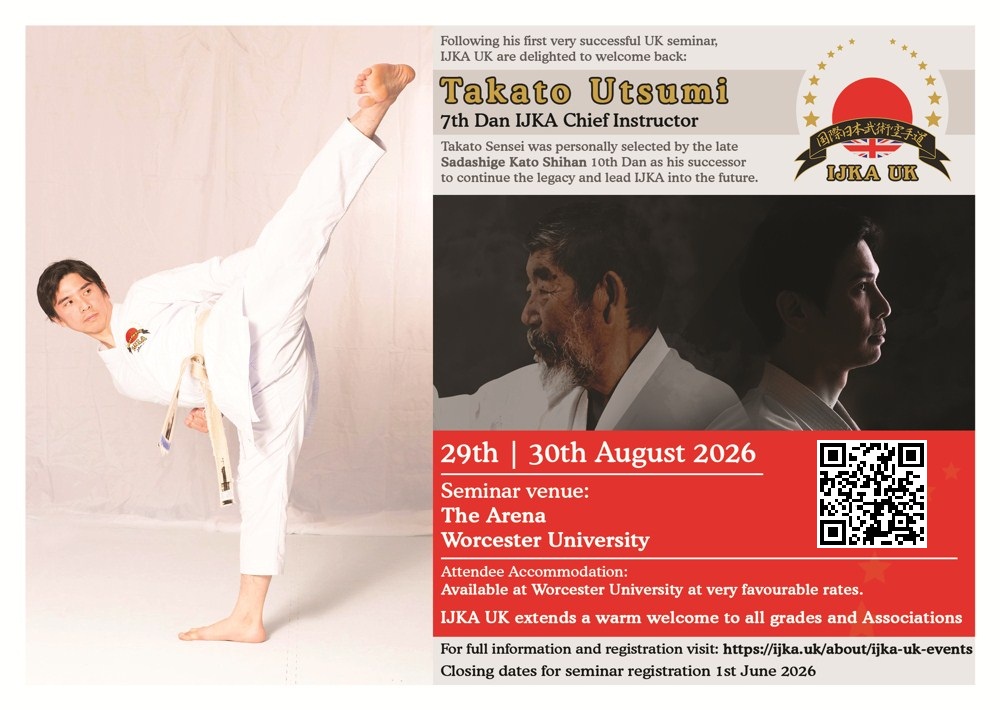
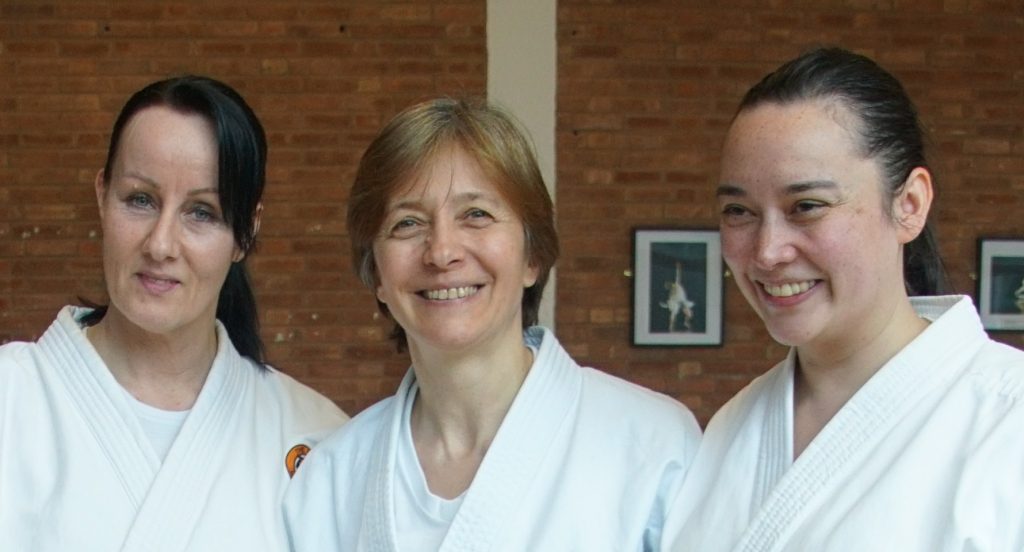
Worcester Shotokan Karate Club (WSKC) located in Worcester (UK) is run on a ‘non profit’ basis. Affiliated to the International Japan Karate-Association – United Kingdom (IJKA UK) we are dedicated to teaching the Japanese martial art of Shotokan karate as taught by the late Sadashige Kato 10th Dan IJKA..
IJKA UK is affiliated to IJKA International.
All abilities, aged 12 to 50+ are welcome to join whether you are a beginner or a karateka returning after a break.
All classes are conducted in a safe and friendly environment by Sensei Steve Cameron, 4th Dan, IJKA, who holds DBS enhanced disclosure.
All our instructors hold DBS enhanced disclosure.
Low Class fees make Shotokan Karate affordable and accessible to many.

Classes are held every Monday and Thursday at the venues and times shown below:
More Information
Find WSKC ~ Download our useful pdf document for maps and information about how to find us.
Training Fees ~ Download our useful pdf document to find out about our modest fees.
Class Times and Structure
Classes are split each night and structured towards the karateka’s ability.
Platinum Hall
7:00pm ~ 8:00pm » Beginners and intermediates (to 6th Kyu ~ green belt)♦
8:00pm ~ 9:00pm » Seniors (5th Kyu ~ blue belt and above)♦
Nunnery Wood
6:30pm ~ 7:30pm » Beginners and intermediates (to 6th Kyu ~ green belt)♦
7:30pm ~ 8:30pm » Seniors (5th Kyu ~ blue belt and above)♦
♦ Any changes to our regular class schedules will always be communicated to our members in advance.
Note: Senior karateka at the club may attend both sessions (at no extra cost) to benefit from extra training.
However, instruction in the first class will always be focused towards our beginners and intermediates.
More club information
Our FAQ page provides detailed club information.
However, if there is further information you require, the easiest way to find out more is to visit our dojo. You will find an open and friendly welcome always awaits.
You can also use our Contact Us page but we prefer meeting future members in person.